


Laser Cutting Service Cost Pricing Factors
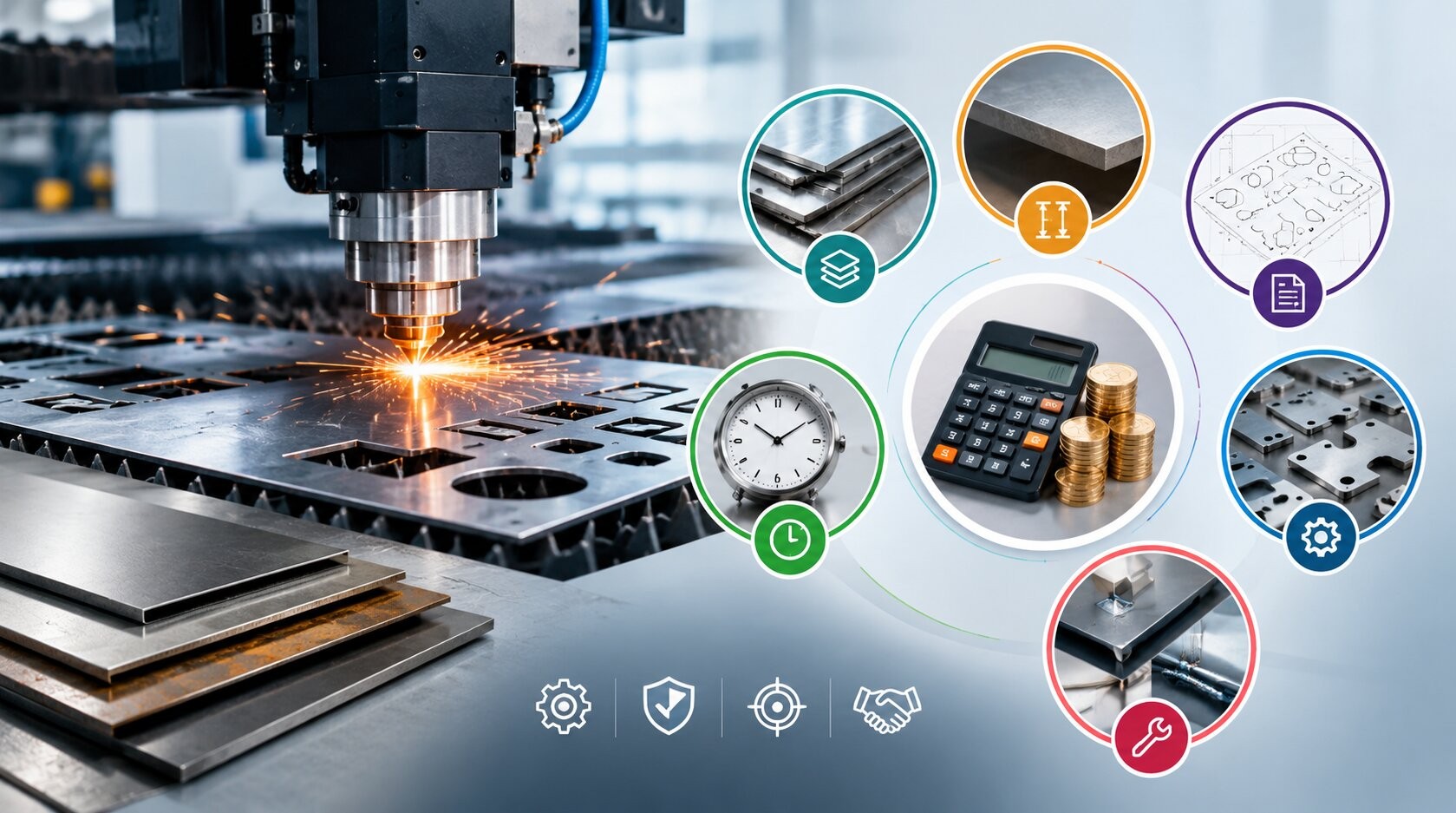
Laser Cutting Service Cost: What Factors Affect the Price?
Laser cutting is widely used in industrial fabrication to cut metal sheets into accurate shapes and components. Businesses use laser cutting services to produce customized metal parts for electrical panels, machine enclosures, industrial equipment, brackets, cabinets, and various fabrication applications. However, the laser cutting service cost can vary depending on the material, sheet thickness, design requirements, cutting time, and total order quantity.
Understanding these pricing factors helps businesses plan their projects, manage budgets, and select a suitable laser cutting service provider. Sanjay Industries provides industrial laser cutting and fabrication services designed to meet different project specifications and customer requirements.
What Is Laser Cutting Service Cost?
Laser cutting service cost refers to the charges associated with cutting metal sheets or components according to the required dimensions, shapes, and technical drawings. The final price depends on the work involved in completing an order rather than one fixed rate for every project.
Some jobs involve simple shapes and thin sheets, while others require intricate designs, thicker materials, multiple cutting operations, and additional fabrication processes. These differences affect machine time, material usage, and overall project cost.
Depending on the service provider and project requirements, pricing may be calculated according to cutting length, machine operating time, material consumption, the number of components, or a combination of these factors.
1. Material Type Affects Laser Cutting Cost
The type of metal used in a project is an important factor when estimating laser cutting charges. Different materials have different purchase costs and cutting characteristics.
Common materials used for industrial laser cutting include:
- Mild steel (MS): Used for brackets, frames, equipment covers, panels, and general industrial components.
- Stainless steel (SS): Suitable for applications requiring corrosion resistance, clean finishes, and specific material properties.
- Other suitable metals: The availability and suitability of aluminium and other metals depend on the cutting equipment, material specifications, and service provider's capabilities.
Material grade, sheet size, thickness, and market price can all influence the total quotation. Providing accurate material specifications helps a service provider estimate the work more effectively.
2. Sheet Thickness and Cutting Requirements
Sheet thickness can significantly affect laser cutting service cost. Thicker materials generally require different cutting parameters and may take longer to process, depending on the material and equipment being used.
For example, cutting a simple design in a thin mild steel sheet may require less machine time than cutting a complex profile in a thicker sheet.
When requesting a quotation, provide the material type and exact thickness. These details help the service provider determine suitable cutting parameters and assess whether the requested specifications can be achieved.
3. Design Complexity and Cutting Length
The complexity of a component's design can affect the time required to complete a laser cutting job. Designs containing many holes, small profiles, curves, slots, and intricate shapes may require more cutting movements than simple rectangular or circular parts.
Other design-related factors include:
- Total cutting length.
- Number and size of holes.
- Complexity of the external profile.
- Distance between features.
- Required dimensional tolerances.
- Material layout and nesting efficiency.
A well-prepared CAD drawing can help reduce uncertainty during quotation and production planning. Sharing the correct drawing file and final dimensions helps the service provider assess the job more accurately.
4. Cutting Time and Machine Operating Costs
Machine operating time is another factor that may influence laser cutting charges. The time required for a job depends on material thickness, cutting speed, design complexity, setup requirements, and the number of components.
The overall cost of operating laser cutting equipment may also include electricity, maintenance, consumables, operator time, programming, and machine setup.
For this reason, two orders involving the same material and sheet thickness may receive different quotations if their cutting requirements differ.
5. Order Quantity and Production Volume
The number of components requested can affect the cost per part. Small orders may involve setup and programming costs that are distributed across only a few components. Larger orders may allow these initial costs to be spread across more parts, depending on production efficiency and material utilization.
For an accurate quotation, specify whether your requirement involves:
- A single custom component.
- Prototype or sample parts.
- A small batch of components.
- Repeated production orders.
- A large quantity of identical parts.
The most economical quantity depends on the design, material requirements, production schedule, and service provider's pricing structure.
6. Material Wastage and Sheet Utilization
Material utilization can influence the overall cost of a laser cutting project. If parts are arranged efficiently on a sheet, more usable components may be obtained from the available material.
This process is commonly called nesting. Good nesting can reduce unused sheet areas, although the results depend on part geometry, spacing requirements, sheet dimensions, and cutting constraints.
Sharing multiple components from the same project may help the service provider evaluate whether the parts can be arranged efficiently. However, parts should always be nested according to the required quality and technical specifications.
7. Additional Fabrication and Finishing Requirements
Some projects require more than laser cutting. Components may need additional operations before they are ready for installation or assembly.
Depending on the project, additional services may include:
- CNC bending to achieve the required angles.
- Welding for joining metal components.
- Assembly of fabricated parts.
- Edge finishing or other specified finishing operations.
- Inspection and dimensional verification.
These services can add to the total project quotation. When several operations are required, explain the complete scope of work before requesting a price so the quotation reflects the actual requirements.
How to Get an Accurate Laser Cutting Service Cost Estimate
To receive a useful quotation, provide clear information about your project. This reduces the need for repeated clarification and helps the service provider understand the required work.
Prepare the following details:
- Material specification: State whether the component requires mild steel, stainless steel, or another suitable metal.
- Sheet thickness: Mention the exact thickness and material grade, where applicable.
- Technical drawing: Share a suitable CAD file or drawing with clear dimensions.
- Order quantity: Specify the number of components required.
- Additional operations: Mention any bending, welding, assembly, or finishing requirements.
- Delivery expectations: Provide the required delivery schedule and project location.
A quotation should be evaluated against the complete scope of work, material specifications, quality requirements, and delivery expectations—not price alone.
Why Choose Sanjay Industries for Laser Cutting Services?
Sanjay Industries supports industrial customers with laser cutting and related fabrication services based on project drawings and specifications. Clear communication about material selection, dimensions, quantity, and additional fabrication requirements helps establish the scope of each job.
When discussing your project, share the component drawings, material thickness, order quantity, and any special requirements. This information helps the team assess your needs and provide a project-specific quotation.
Explore our Laser Cutting Services to learn more about our service offering.
The laser cutting service cost depends on several factors, including material type, sheet thickness, design complexity, cutting length, machine time, order quantity, material utilization, and additional fabrication requirements. Understanding these factors makes it easier to prepare technical information, compare quotations, and plan an industrial project.
For businesses requiring accurate metal components, providing complete drawings and specifications is an important first step toward receiving a suitable quotation. Contact Sanjay Industries to discuss your laser cutting and fabrication requirements and request a quote based on your project needs.
